
I. Introduction
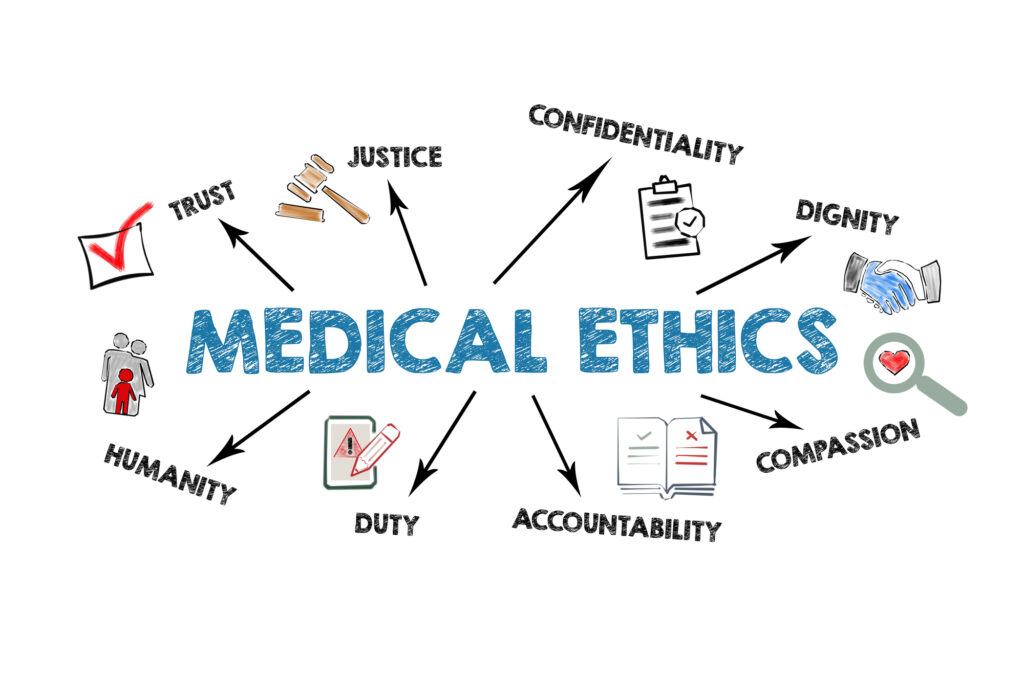
- As healthcare practitioners, we are guided by a set of and values that govern our interactions with patients, colleagues, and the community. This guiding framework is known as medical ethics.
- Medical ethics refers to moral principles and standards that regulate the conduct of healthcare professionals in their practice and interactions with patients.
II. Understanding Medical Ethics
- Medical ethics is a of ethics that specifically focuses on issues and dilemmas healthcare practice.
- It encompasses a set of principles that guide the actions and decision-making of healthcare professionals, ensuring ethical conduct and the provision of quality care to patients.
- The core principles of medical ethics include autonomy, beneficence, non-maleficence, and justice.
III. Importance of Medical Ethics in Healthcare Practice
Protecting Patient Rights:
- Medical ethics serves to protect and uphold the rights and dignity of patients. It emphasizes the importance of respecting patient autonomy, preferences, and confidentiality.
- By following ethical principles, healthcare practitioners ensure that patients are treated with respect, empathy, and fairness.
Promoting Good Patient Care:
- Ethical standards in healthcare practice help maintain high-quality patient care. Practitioners are guided by principles of beneficence (doing good) and non-maleficence (avoiding harm) to prioritize the well-being of patients.
- Upholding ethical values enhances the trust and confidence that patients have in their healthcare providers, leading to better health outcomes and patient satisfaction.
Building Trust and Professionalism:
- Adhering to ethical principles fosters professionalism and integrity among healthcare professionals. Maintaining honesty, transparency, and accountability in practice builds trust with patients and colleagues.
- By demonstrating ethical behavior, healthcare practitioners establish credibility and credibility and strengthen the reputation of the healthcare profession as a whole.
Resolving Ethical Dilemmas:
- In the complex landscape of healthcare, practitioners often encounter ethical dilemmas that require careful consideration and decision-making. Medical ethics provides a framework for analyzing and resolving such dilemmas in a thoughtful and systematic manner.
- Understanding ethical principles and values equips healthcare professionals with the tools to navigate challenging situations and make ethically sound choices in the best interest of their patients.
IV. Conclusion
- In summary, medical ethics plays a crucial role in shaping the conduct and decision-making of healthcare professionals. By upholding ethical standards, practitioners safeguard patient rights, promote quality care, build trust, and navigate ethical dilemmas with integrity and compassion. Understanding the definition and importance of medical ethics is essential for cultivating a culture of ethical practice and excellence in healthcare.
Courtesy:
Prof. Kayode Oseni
Dean of School of Natural Medicine, Cyrillic College of Homeopathy and Holistic Health Sciences
For more write ups like this, kindly follow the link below;
https://chat.whatsapp.com/Fj5LYnatO8PAwPplAFZdpH