Here’s a question for you. If something has been used on real patients, by trained people, for over thirty years, what do you do with that? Wave it away? Or ask questions?
We ask questions. So this week, let’s talk about magnetic therapy.
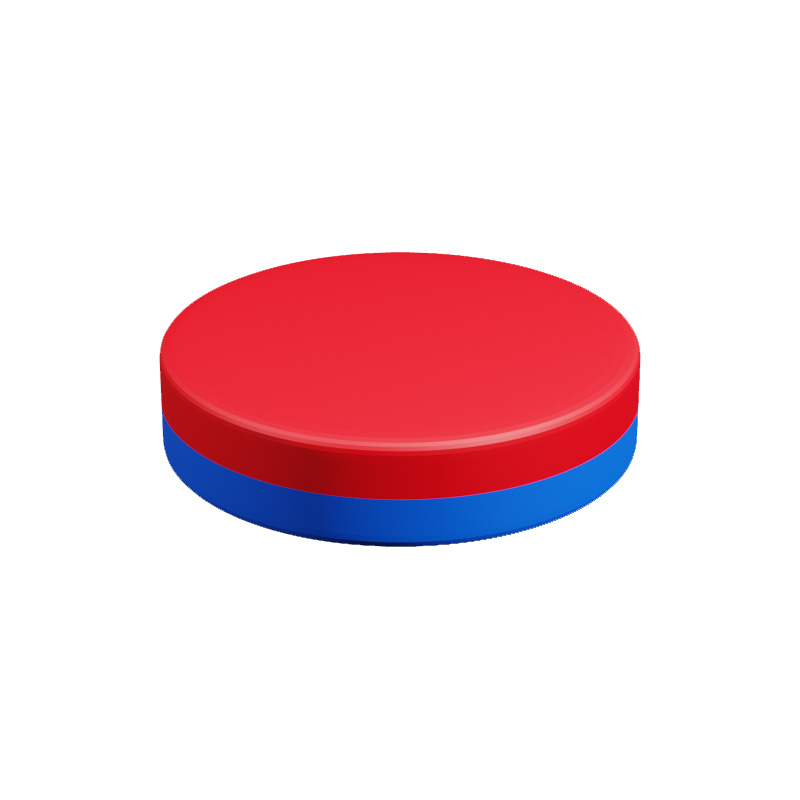
Magnetic therapy, or magnetotherapy, or clinical magnetology if you want the long name, is simply using magnetic fields on the body for healing. A magnet can be placed on you, worn, slept on, even sat on. It depends on the technique.
And it’s not new, right? Lodestone, that naturally magnetic rock, shows up in healing traditions in India, China, Egypt, Greece. People have been curious about this for thousands of years. What we have today is the same curiosity, with better tools and more structure.
Don’t worry, we’re not giving you a physics lecture. Short version: some magnets are natural, like lodestone. Some are artificial, made by people. Permanent magnets keep their magnetism on their own, and those are the ones most people picture. Electromagnets only work when current is running through them. Switch off the current, the field is gone.
Materials behave differently too. Ferromagnetic materials, like iron, are strongly drawn to magnets. Paramagnetic ones are only weakly drawn. That’s why the choice of material and strength matters.
Every magnet has two poles, and in the Indian tradition of magnetic therapy, the one that faces your body matters. Different pole, different intention. So it’s not “just put a magnet on somebody.” There’s a method to it.
We’ll be honest with you. Nobody has one clear, settled answer. There are several theories: effects on blood flow, on the tiny electrical signals between cells and nerves, on inflammation and pain. Some have been looked at in the lab, some are still ideas waiting to be tested.
But “we can’t fully explain how” is not the same as “nothing is happening.” Medicine has used plenty of things for years before anyone could explain them.
Pain. Arthritis and other degenerative conditions. Sleep problems like insomnia. Stress. Stroke rehabilitation. Blood pressure management alongside proper care. We are not saying it cures any of these. We’re saying these are the areas where practitioners have seen benefit, and they deserve a serious look.
Cyril Holistic Hospital: thirty years and counting
Professor Cyril Omisande studied magnetic therapy in India, brought it home to Nigeria, and became the pioneer of clinical magnetology here. Thirty years now. And they haven’t stood still. Different techniques, different approaches, new ideas tested along the way. Think about it: a practice doesn’t last three decades by accident.
Let us tell you about something we saw ourselves. A stroke patient was carried in. He couldn’t speak. Today? He walks on sand. He climbs stairs, up and down. He talks.
Now, we’re not going to tell you the magnet did all of that alone. It was a full programme: diet, massage, physiotherapy, magnetic therapy together. That’s what holistic means. But the magnetic therapy was in there, and we believe it earned its place.
RESEARCH!!!
Here’s what we really want. Magnetic therapy is used in clinics all over the world, in different forms. But the wider healthcare community will only take it seriously when more research is done and more is published. The research out there right now is limited and mixed, and we’re not hiding from that. We want to close the gap.
People with decades of hands-on experience are holding knowledge that should be documented, tested and shared. So if you’re a researcher, a clinician, a student, reach out. Let’s do this properly.
It’s generally considered low-risk, but it’s not for everybody. If you have a pacemaker, a defibrillator or any implanted electronic device, or an insulin pump, or you’re pregnant, speak to a qualified practitioner first. And please, never stop prescribed medication because of any therapy. If something is serious or sudden, see a doctor. Magnetic therapy sits beside proper care. It doesn’t replace it.
CURIOSITY FACTS OF THE WEEK
Did you know that magnets are already part of mainstream medicine? Doctors use a technique called transcranial magnetic stimulation, or TMS, where magnetic pulses are directed at the brain to stimulate nerve cells. It was first developed in 1985 by a team in Sheffield, England, and in 2008 the US FDA cleared it for treatment-resistant depression. So when someone tells you magnets and the human body have nothing to say to each other, remember that hospitals around the world are already using magnetic fields to talk to the brain. Different technique, different purpose, but the same curiosity that drives us. Interesting, right?
We’ve seen what we’ve seen. We believe magnetic therapy deserves a place in the conversation, and we want the evidence to catch up with the experience.
 Explore our programmes:
https://cyrilliccollegehht.com/programmes/
 Speak with our admissions team:
https://wa.me/message/I2HANGAAVNMGI1
 Visit Cyrillic College:
https://cyrilliccollegehht.com/
 Want more?
These articles come out every Friday, bringing you fascinating questions about the human body, health and the science behind both, explained without the headache.
Subscribe here:
Until next Friday…
Stay curious.