
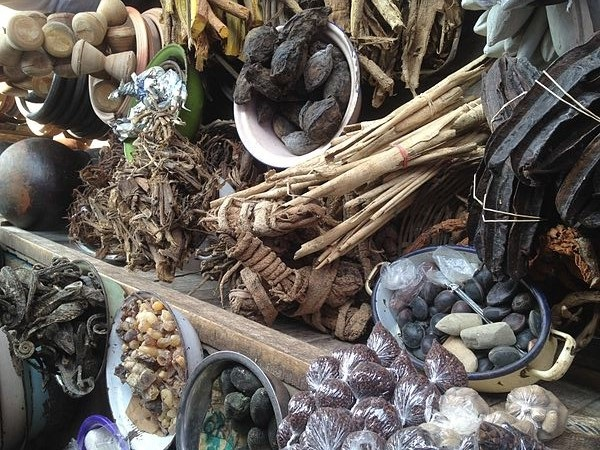
So while at the meeting with the Ogun State Alternative Medicine Board, at some point the Executive Secretary asked everyone to stand and introduce themselves. Say what you practice, what your experience is. Simple enough, right?
But listen to what we heard. Somebody said “natural medicine practitioner.” Somebody said phytotherapist. Somebody said homeopath. Another said magnetic therapy, another nutritionist, another naturopath. And when the naturopath explained what she does, she said, “I use lifestyle, nutrition and herbs.” Then someone corrected her, and honestly it was a good correction. Naturopathy isn’t defined by the remedies. It’s defined by its principles. Herbs, food, lifestyle, those are just tools you use to apply the principles.
And we sat there thinking, if the practitioners themselves are confused, what about the public? So let’s try to clear the air a bit.
Take naturopathy, like we just said. It’s a way of thinking: treat the whole person, look for the root cause, prevent before you cure, and teach the patient to look after themselves. Homeopathy is a different system altogether. It uses highly diluted substances matched to the person’s overall picture, and we should say plainly that it’s the area where we hardly have any idea about and not to talk of how to apply it in healthcare. That’s actually another reason to open things up and let people test it.
Then you have herbal medicine and phytotherapy, which people use as if they’re the same thing. For us they’re not. Herbal medicine involves culture. You’re thinking about the person’s tradition, what has been handed down, how the remedy fits into their world. Phytotherapy is the more modern, scientific way of looking at plants. What’s the active ingredient? How much do you need? How do you make the best use of it?
Acupuncture, chiropractic, osteopathy, manual therapy, those are hands-on, body-based. Needles, joints, the spine, muscles. Magnetic therapy is in that family too, though honestly, similar case as Homeopathy. Nutrition and lifestyle medicine work through food, sleep, movement, stress. And then there’s the person who prays for his patients. That’s real to him and real to them, and we respect it, but let’s call it what it is, spiritual healing, so nobody confuses it with the others.
Now, “natural medicine.” What is that? We honestly don’t know. It’s not a discipline. There’s no agreed training, no standard, no scope. It’s an umbrella anybody can stand under, and that’s exactly how somebody is a herbalist today, a therapist tomorrow, a naturopath next week. And “natural” doesn’t mean safe. Plenty of natural things can kill you. So here’s our small suggestion. When you introduce yourself, say your modality, say your training, say what you treat and what you don’t. That’s all. The public deserves that.
Now to the second thing, and this one is a bit of a love letter to our fellow practitioners.
At that same meeting, people said they have the remedy for hepatitis B. For hepatitis C. For sickle cell. For spondylosis. Herpes, gonorrhea. Somebody said they raised a patient’s CD4 count. Somebody said a breast lump got smaller. And I was like, wow. Because if you say this to an orthodox doctor, they’ll say “never.” Say it to the public, they’ll say “never.” So who is right? Who is lying, who is telling the truth? Nobody can say, and that’s the problem. Because the only people who know are you and the patients you treated.
We’re not calling anybody a liar. Some of us truly are seeing real results. We’ve even started seeing medical doctors admit that there are things they can’t manage which some herbal therapists are managing well. So the door is open. But the public looks down on this work for one simple reason: they can’t see anything. It’s not that there’s nothing there, it’s that there’s nothing to look at.
And we understand why. Some of you keep it secret. It’s your ingredient, your business, your income. We get it. But we want to gently ask you to think again. The best way to promote your practice, to make this whole field popular and respected, is to be open.
So whatever you can treat successfully, embrace publication. Keep proper records, the diagnosis, the lab results before and after, what else the patient was taking. Invite researchers. Work with scientists, with universities, with hospitals. Let them test it, and let the results come out, even when they’re not perfect. If it works, imagine what happens. People can use it at home, in clinics, in different practices, and other researchers can build on it. That reaches a lot further than word of mouth.
So that’s our appeal. Say what you practice. Show what you’ve found. Let people look. We’ll all be better for it.
Because if we want people to take complementary and integrative healthcare seriously, then we have to become serious about defining what it is that we actually practise.
 Explore our programmes:
https://cyrilliccollegehht.com/programmes/
 Speak with our admissions team:
https://wa.me/message/I2HANGAAVNMGI1
 Visit Cyrillic College:
https://cyrilliccollegehht.com/
 Want more?
These articles come out every Friday, bringing you fascinating questions about the human body, health and the science behind both, explained without the headache.
Subscribe here:
Until next Friday…
Stay curious.