
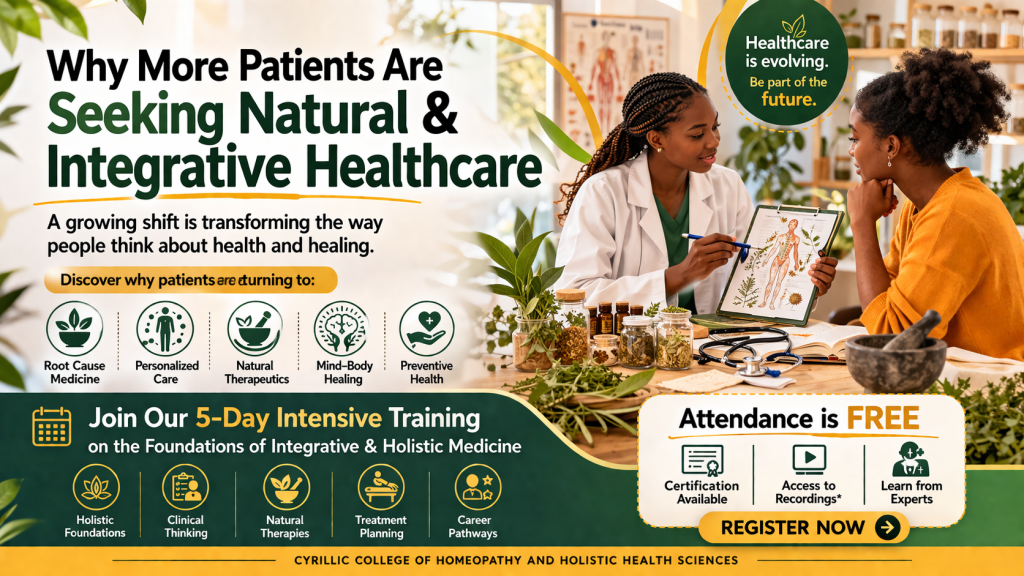
Across the world, a quiet shift is taking place in the way people think about health and healing. More patients are exploring natural, complementary, and integrative approaches to healthcare, not necessarily as a replacement for conventional medicine, but as a way to achieve deeper and more lasting wellbeing.
Hospitals remain essential for acute care, emergency treatment, and advanced medical procedures. However, when it comes to long term health, chronic conditions, and overall vitality, many patients are discovering that healing often requires more than medication alone. They are looking for approaches that consider the whole person rather than focusing only on isolated symptoms.
This growing interest has led to the rise of what is now known as integrative healthcare, a model that combines conventional medical knowledge with evidence informed natural and holistic therapeutic systems.
But why exactly are more patients turning in this direction?
The Growing Burden of Chronic Disease
One of the biggest factors behind the growing interest in integrative healthcare is the global rise of chronic illnesses.
Conditions such as hypertension, diabetes, digestive disorders, autoimmune conditions, allergies, chronic fatigue, and stress related illnesses are becoming increasingly common. These conditions rarely have a single cause. Instead, they often emerge from a complex interaction of lifestyle, environment, nutrition, emotional health, genetics, and other factors.
Many patients living with chronic conditions discover that treating symptoms alone does not always address the underlying imbalance that led to the illness in the first place.
Integrative healthcare focuses on identifying those deeper patterns and contributing factors. By looking at the whole person, practitioners can develop more individualized strategies that support long term recovery and resilience.
Patients Want to Be Understood, Not Just Diagnosed
Another reason many people are exploring holistic care is the desire for more personalized attention.
In many healthcare settings today, practitioners are under immense pressure. Appointments can be short, and consultations may focus primarily on identifying symptoms quickly in order to prescribe treatment.
While this system can be efficient, many patients feel that important aspects of their health story are not always fully explored.
Integrative and holistic practitioners often place significant emphasis on case taking and patient history. This means understanding not only the physical symptoms, but also the patient’s lifestyle, emotional wellbeing, stress levels, dietary patterns, and environmental influences.
Patients frequently report that simply being heard and understood in this way can be a powerful part of the healing process.
The Search for Root Cause Medicine
Another important reason for the growing interest in integrative healthcare is the concept of root cause medicine.
Rather than focusing only on managing symptoms, many natural and holistic systems aim to identify the deeper imbalance that gave rise to the condition.
For example, persistent headaches might not only be viewed as a neurological issue. They could also be connected to stress patterns, digestive imbalances, nutritional deficiencies, hormonal changes, sleep disturbances, or environmental triggers.
By exploring these connections, practitioners can design treatment strategies that support the body’s natural regulatory systems.
This approach often includes a combination of therapies such as lifestyle adjustments, nutritional support, herbal medicine, homeopathy, mind body practices, and other integrative modalities.
A Growing Interest in Natural Therapeutics
Another factor driving the popularity of integrative healthcare is the increasing public interest in natural therapeutic systems.
Across many cultures, traditional medicine systems have existed for centuries. Herbal medicine, homeopathy, acupuncture, nutrition based therapies, and other holistic practices have long histories of use in supporting health and recovery.
Today, many patients are rediscovering these approaches and exploring how they can complement modern medical care.
Importantly, integrative healthcare does not reject scientific medicine. Instead, it seeks to combine the strengths of different healing traditions in ways that are safe, responsible, and patient centred.
Prevention Is Becoming a Priority
Healthcare systems around the world are increasingly recognizing the importance of prevention.
Waiting until disease appears before taking action is not always the most effective strategy. Many chronic illnesses develop gradually over time, influenced by lifestyle, diet, stress, environmental exposure, and other factors.
Integrative healthcare places strong emphasis on preventive strategies such as:
Improving nutrition
Supporting healthy sleep patterns
Managing stress effectively
Encouraging physical activity
Strengthening the body’s natural resilience
When these foundations are addressed early, the risk of many long term health problems can often be reduced.
The Emergence of Integrative Healthcare Professionals
As public interest grows, the demand for skilled practitioners trained in integrative and holistic healthcare is also increasing.
These practitioners are trained to think broadly about health, combining clinical observation with a deeper understanding of how different physiological and lifestyle factors interact.
In many parts of the world today, integrative medicine clinics, wellness centres, and complementary health practitioners are becoming an increasingly important part of the healthcare landscape.
For those who are passionate about helping others and interested in exploring natural approaches to health, this emerging field offers exciting opportunities for learning and professional development.
Learning the Foundations of Integrative Medicine
For individuals who are curious about this field, one of the best ways to begin is by gaining a clear understanding of the foundational principles that guide integrative healthcare.
This includes learning how practitioners evaluate patients, how different therapeutic systems operate, and how treatment strategies are developed in real clinical situations.
To support this growing interest, Cyrillic College of Homeopathy and Holistic Health Sciences will be hosting a special educational event designed to introduce participants to the core principles of integrative healthcare.
Upcoming Training Opportunity
This June, the college will host a 5 Day Intensive Training on the Foundations of Integrative and Holistic Medicine.
The program is designed to provide participants with a structured introduction to:
The philosophy of holistic medicine
Clinical thinking and patient assessment
Natural therapeutic systems such as homeopathy and herbal medicine
Integrative treatment planning
Professional pathways in holistic healthcare
The workshop will be facilitated by experienced practitioners and educators who have spent years working within the field of integrative medicine.
Participation in the training is free, and attendees will also have the opportunity to obtain certification upon completion.
For anyone interested in understanding how integrative healthcare works in practice, this training offers a rare opportunity to learn directly from professionals actively involved in the field.
Begin Your Journey Into Integrative Healthcare
Healthcare is evolving. Patients are increasingly seeking approaches that recognize the complexity of the human body and the many factors that influence health.
Integrative medicine represents one of the most promising directions in this evolving landscape, bringing together the wisdom of traditional healing systems with modern clinical understanding.
For those who wish to explore this field further, the upcoming intensive training offers an excellent starting point.
Reserve your place for the 5 Day Intensive Training on Foundations of Integrative and Holistic Medicine.
Attendance is free.
Registration link:
https://docs.google.com/forms/d/e/1FAIpQLSfDKIHIlPeSdn3d-RUBrVTqky5U5RZelhSZ_lSUEGBSYKUYrQ/viewform?usp=header